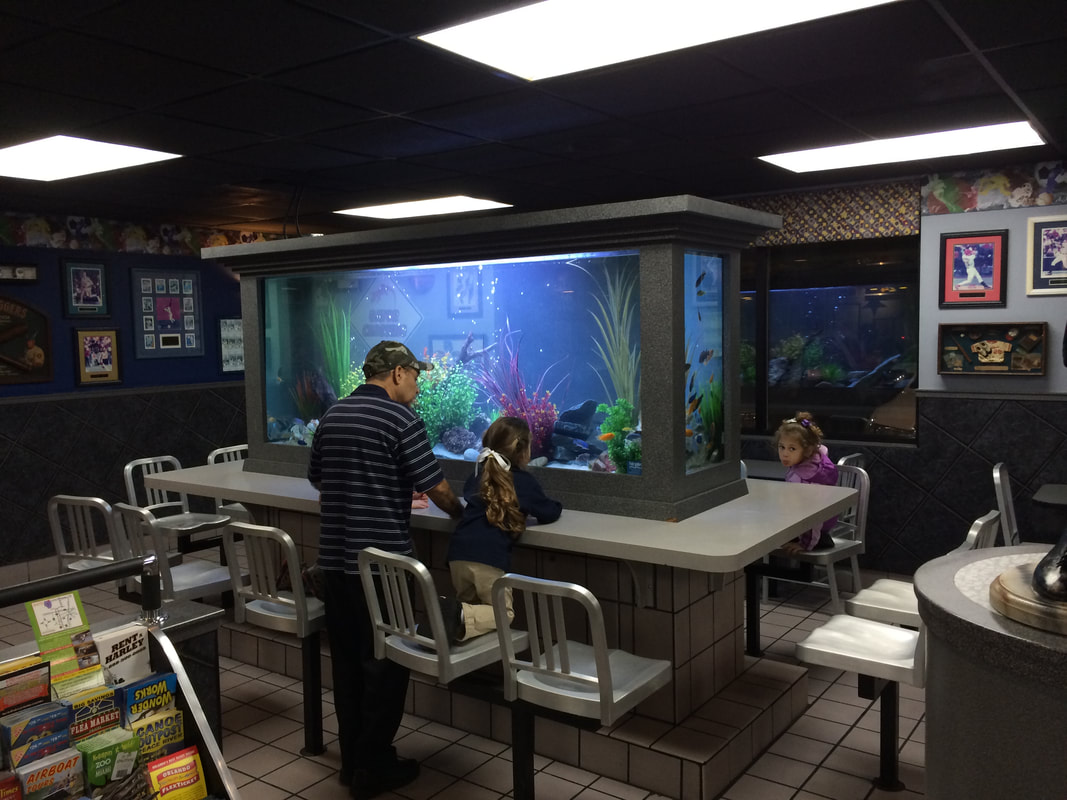
A 75-gallon system, three weeks after conversion.
Saltwater systems fail for predictable reasons: salinity drift, equipment stacked on equipment, livestock that punishes a single bad week, and a maintenance bill that keeps climbing. Conversion is not giving up on the tank — it is keeping the glass, the cabinet, and the spot in the room while removing everything that made the system fragile. We audit the existing setup, place surviving saltwater stock with local reef-keepers rather than discarding it, strip and resurface the tank, build a planted hardscape, cycle it properly, and stock Florida-farmed freshwater livestock. Most conversions finish in two to three weeks and cut monthly running cost by 60–75%.
Every visit, on the checklist.
- Existing system and equipment audit
- Livestock rehoming plan with local keepers
- Full strip, resurface, and reseal check
- Hardscape, driftwood, and plant design
- Filtration simplified and right-sized
- Cycling and water chemistry buildout
- Florida-farmed freshwater livestock
- 30-day stability check and maintenance handoff
From first call to finished tank.
Audit
We document what's in the system, what's failing, and what can be reused. You get an honest read on whether conversion beats repair.
Rehome
Corals and marine fish go to local reef-keepers on our list. Nothing usable is thrown away.
Rebuild
Strip, resurface, rescape, replumb. The tank comes back with fewer moving parts than it went in with.
Stabilize
We cycle it, stock it, and watch water quality for 30 days before handing it to a normal maintenance cadence.
What it costs.
Conversions are quoted as a project after an on-site audit, because the number depends on gallons, how much equipment can be reused, and how much livestock needs rehoming. A hospital atrium conversion we did in Orlando cut maintenance cost by 72% and has been stable since Q1 2017 — that page is on the record in our case studies.
Common questions.
Why convert a saltwater tank to freshwater?
Cost and stability. Freshwater displays run on far less equipment, tolerate a missed week, and cost roughly a quarter to a third as much per month to keep looking good.
What happens to my corals and marine fish?
They are rehomed with local reef-keepers we work with. We plan that before touching the tank.
How long is the tank out of service?
Two to three weeks from strip to stocked, depending on volume and how the cycle progresses. Commercial clients usually keep the room open throughout.
Can you reuse my existing equipment?
Some of it. Sumps, heaters, and lights often carry over; protein skimmers, reactors, and dosers come out — that removed complexity is where the savings come from.
Will a freshwater tank look as good as a reef?
Different, not lesser. A planted hardscape display reads as intentional design and photographs well, which is why our restaurant and healthcare clients keep asking for it.